Source recyclable glass food storage jar for Home, Restaurant, Kitchen
Compare 30 listings of recyclable glass food storage jar options featuring various sizes, capacities, and customization services. Buyers can evaluate specifications like dimensions, materials, and packaging to find suitable solutions for daily use or commercial settings.
Key considerations
Products List


Comprehensive Sourcing Guide
Strategic Sourcing Guide for Recyclable Glass Food Storage Jars
Understanding Technical Specifications and Material Integrity
When sourcing recyclable glass food storage jars, the primary focus must be on the specific material composition and dimensional consistency that define product utility. The market offers variants constructed from high borosilicate glass, a material choice that distinguishes premium storage solutions from standard soda-lime glass. High borosilicate glass is preferred for its thermal shock resistance and durability, ensuring the jar can withstand temperature fluctuations without cracking. This material property is critical for applications involving hot fill processes or microwave reheating, although specific temperature ratings must be verified against the supplier's technical data sheet rather than assumed.
Dimensional specifications vary significantly across different product models, requiring precise alignment with storage needs. Observed product data indicates specific dimensions such as 112112185mm and 112112188mm, suggesting that square or rectangular profiles are common in certain design lines, while other models feature a round shape. The capacity of these units is equally diverse, ranging from small 150ml containers to larger 1500ml units, with specific models citing standards like 1700ml or 150ml/300ml/700ml options. Buyers must carefully cross-reference the internal volume with the external footprint to ensure compatibility with existing pantry shelving or commercial kitchen racking systems.
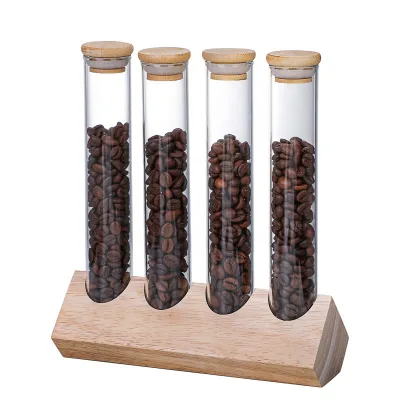
The lid assembly is a critical component of the storage system's integrity. Effective seals often utilize a combination of acacia wood and food-grade silicone, providing an airtight closure that preserves the freshness of contents like salt, pepper, and chili. The wood component adds an aesthetic appeal often associated with Japanese or classical Chinese styles, while the silicone ensures the necessary barrier against moisture and air. It is essential to verify that the "food grade" designation for the silicone is supported by specific migration test results, as this directly impacts the safety of the stored food.
Compliance and Certification Verification
For any food contact product, regulatory compliance is non-negotiable. The sourcing process must prioritize suppliers who can provide valid documentation for recognized food safety certifications. In the context of glass food storage, the most relevant certifications observed in the market include LFGB (German Food and Feed Code) and FDA (U.S. Food and Drug Administration) compliance. These certifications indicate that the glass and associated materials have undergone rigorous testing for heavy metals, lead, and cadmium leaching, ensuring they do not contaminate food products.
Buyers should not rely on general claims of "safe food grade glass ware" without requesting the specific certificate of analysis (CoA) or the official certification document. The presence of these certifications is particularly vital for products intended for export to the European Union or North America. While some background information may reference ISO9001 or ISO 14001 standards, these are management system certifications rather than direct product safety approvals. Therefore, the primary verification focus must remain on the LFGB and FDA status, which directly address the chemical safety of the glass and the silicone components.
Additionally, the sustainability aspect of the product should be verified through material composition data. The "recyclable" nature of the glass is inherent to the material, but the sourcing guide should encourage buyers to confirm that the entire product, including the lid and packaging, adheres to eco-friendly principles. Features such as "Eco-Friendly" and "Sustainable" are often listed as product attributes, but the buyer must ensure these claims are backed by the supplier's environmental management practices or specific recycling program documentation.
Cost Drivers and Pricing Dynamics
The pricing structure for recyclable glass food storage jars is influenced by a complex interplay of material costs, manufacturing complexity, and order volume. The base cost is driven by the weight and thickness of the glass, with heavier units like those weighing 0.5kg commanding higher prices than lighter alternatives. The inclusion of specialized components, such as acacia wood lids with silicone seals, adds a significant premium compared to jars with simple plastic or metal closures.
Order quantity is a primary determinant of the unit price. The market exhibits a wide range of Minimum Order Quantities (MOQ), typically spanning from 100 pieces to 100,000 pieces. Suppliers often offer tiered pricing structures where the unit cost decreases as the order volume increases. For smaller buyers, an MOQ of 100 or 500 pieces may be the entry point, while larger commercial entities may negotiate rates based on orders exceeding 10,000 units. The observed price range in the market, extending from $0.02 to $125 per unit, reflects the vast difference between single-piece retail items and bulk industrial packaging.
Packaging requirements also significantly impact the final landed cost. Options such as color boxes, display boxes, and safe packaging with bubble bags add to the material and labor expenses. Customized packaging, including the application of a customized logo, introduces additional setup and printing costs. Buyers should request a detailed breakdown of costs to understand the proportion of the price attributed to the glass jar itself versus the packaging and branding services.
Typical Applications and Usage Scenarios
The versatility of recyclable glass food storage jars allows them to serve a broad spectrum of applications, from residential use to commercial food service. In a home setting, these jars are ideal for organizing dry goods such as salt, pepper, and chili, keeping them fresh and accessible. The specific design features, such as the "Milling Spice" capability, suggest that some models are engineered to function as grinders or dispensers, adding functional value beyond simple storage.
Commercial applications are equally significant, with these jars finding use in restaurants and professional kitchens. The "Stocked" and "Sustainable" attributes make them attractive for establishments aiming to reduce single-use plastic waste. The capacity variations, ranging from 500ml to 1000ml, allow for flexibility in portion control and storage efficiency. Furthermore, the aesthetic styles, including Japanese and Classical Chinese designs, enable these products to serve as both functional storage and decorative elements on dining tables or in retail displays.
The "Daily Use" classification indicates that these products are designed for frequent handling and cleaning. The transparency of the glass allows for easy identification of contents, which is crucial for inventory management in both home and commercial environments. However, buyers should verify the specific usage claims, such as microwave safety or dishwasher compatibility, as these depend on the specific glass thickness and lid material composition.
Supplier Evaluation and Geographic Considerations
Selecting the right supplier requires a thorough evaluation of their manufacturing capabilities and geographic location. The sourcing data indicates that production is concentrated in specific regions of China, with notable origins in Shandong and Hebei provinces. These regions have established supply chains for glass manufacturing and wood processing, which can facilitate efficient production and logistics.
When evaluating suppliers, buyers should assess their capacity for customization. The availability of OEM/ODM services and the acceptance of customized logos are key indicators of a supplier's flexibility. This is particularly important for brands looking to differentiate their products in a competitive market. The ability to accept "Customized Accepted" colors and shapes further enhances the supplier's value proposition.
It is also crucial to verify the supplier's production standards and quality control processes. While specific test results should not be assumed, buyers should inquire about the supplier's internal quality assurance protocols. The presence of features like "Safe Packaging" and "Eco-Friendly" production methods suggests a commitment to quality, but these should be validated through on-site audits or third-party inspections. Additionally, the lead time and production capacity should be discussed to ensure the supplier can meet delivery schedules, especially for large orders with high MOQs.
Quality Control and Long-Term Procurement Strategy
Implementing a robust quality control (QC) strategy is essential for maintaining product integrity and brand reputation. For glass food storage jars, QC should focus on visual inspection for defects such as bubbles, cracks, or uneven sealing. Dimensional accuracy is also critical, as variations in size can affect the fit of lids and the stacking efficiency of the jars. Buyers should establish clear acceptance criteria for these parameters before production begins.
Long-term procurement considerations involve building a sustainable supply chain that can adapt to changing market demands. This includes securing reliable sources for raw materials like high borosilicate glass and acacia wood. The "Recyclable" nature of the product aligns with global sustainability trends, making it a strategic choice for brands committed to environmental responsibility. Buyers should also consider the lifecycle of the product, ensuring that the materials used are not only safe for food contact but also easily recyclable at the end of their useful life.
Finally, maintaining a strong relationship with the supplier is key to long-term success. Open communication regarding design changes, volume fluctuations, and quality issues can help mitigate risks and ensure a steady supply of high-quality products. By focusing on these strategic elements, buyers can effectively navigate the complexities of sourcing recyclable glass food storage jars and secure a competitive advantage in the market.
Comparative Analysis of Product Attributes
To assist in decision-making, the following table summarizes key attributes observed in the market for recyclable glass food storage jars. This comparison highlights the diversity in specifications and helps buyers identify the most suitable options for their specific needs.
| Attribute Category | Option A | Option B | Option C |
|---|---|---|---|
| Material | High Borosilicate Glass | Glass | Glass |
| Shape | Round | Square (112*112mm) | Round |
| Capacity | 150ml - 700ml | 1700ml | 500ml - 1000ml |
| Lid Material | Acacia Wood + Silicone | Wood + Silicone | Standard |
| Style | Japanese Style | Classical Chinese Style | Modern |
| Certification | LFGB, FDA | LFGB, FDA | FDA |
| MOQ | 100 PCS | 500 PCS | 40 PCS |
| Origin | Hebei, China | Shandong, China | Shandong, China |
| Packaging | White Box + Bubble Bag | Color Box | Safe Packaging |
| Customization | Logo, Color | Logo, Color | Logo, Color |
This table illustrates that while the core material remains consistent, the specific configuration of size, style, and certification varies. Buyers should use this framework to filter suppliers based on their specific project requirements, ensuring that the selected product meets all functional and regulatory criteria.
FAQs
What certifications do recyclable glass food storage jars have?
These jars typically hold LFGB and FDA certifications to ensure food safety. This documentation confirms the glass and silicone lids meet strict chemical safety standards for heavy metals and leaching in both European and North American markets.
Which materials are used for the lids on these jars?
Lids are commonly constructed from Acacia wood combined with food-grade silicone. This combination provides an airtight seal to preserve freshness while offering a durable, aesthetically pleasing finish suitable for various kitchen styles.
Can buyers customize the color and logo on these jars?
Yes, customization is available for both colors and logos on these glass containers. Suppliers accept OEM and ODM requests, allowing brands to apply specific branding and color preferences to match their unique product identity.
What is the typical minimum order quantity for these jars?
The minimum order quantity varies, with observed values ranging from 100 to 500 pieces. Specific models may require 500 pieces, while other options start at 100, depending on the supplier and customization level required.
Where are these glass storage jars manufactured?
Manufacturing origins are primarily located in Shandong and Hebei provinces in China. These regions host established supply chains for glass production and wood processing, ensuring efficient logistics for international buyers.
What capacities are available for these glass storage jars?
Available capacities range from 150ml up to 1700ml depending on the specific model. Options include 150ml, 300ml, 700ml, and larger units like 500ml to 1000ml to suit different storage needs.